



Insights Blog
Four Pillar Friday
July 25th, 2025 // Adam Bruderly
Four Pillar Friday
Your weekly guide to thriving in every aspect of life—Physical, Mental, Spiritual, and Financial Wellness.
This Week’s Quote:
“The greatest legacy we can leave our children is happy memories.”— Og Mandino
Physical Wellness
When we moved back, one of the first things we did was add a gym to the house. It’s a simple standalone garage gym, but it is probably one of the spaces that gets used the most. With young kids, crazy schedules, and life happening, it was important to have a space where we could move, train, and reset without making it complicated.
It started as a convenience… but it’s turned into something bigger. As the boys have grown, they know if they wake up and no one’s around, they can find us in the gym. And now, they’re heading out there on their own. Watching them jump into it…sometimes just for fun, sometimes for training…has been a quiet win I didn’t fully expect.
A friend shared a great WSJ article this week that hit home: moving together builds better relationships, especially as kids get older. It’s not about pushing workouts. It’s about sharing space, energy, and time without the pressure of “deep talks.” Movement just makes those conversations happen naturally.
- Less stress.
- Better connection.
- Healthier bodies and healthier relationships.
Not every session has to be structured. Sometimes it’s just about playing catch, going for a walk, or knocking out a few pull-ups together. The more we move together, the more we show up for each other.
Movement isn’t just about fitness…it’s about family. And might just be the bridge to communication we need.
Mental Wellness
A recent Axios report raises growing concerns from pediatricians and psychologists: AI chatbots could pose new risks for young children’s development, especially those under 5.
While kids have long been exposed to screens, the shift from passive media to interactive AI conversations is a big leap. Experts warn it could impact language development, social skills, and even brain wiring in ways we don’t fully understand.
- Early studies show children are more likely to trust robots over humans, even when the AI is wrong.
- AI companions are always agreeable, potentially limiting kids’ ability to experience normal boundaries like hearing “no.”
- The foundational wiring of the developing brain may be shaped by interacting with responsive AI: altering trust, empathy, and relationship skills.
This is uncharted territory, and while the technology is exciting, the long-term impacts on how children build relationships and reality are still unknown.
If you’re a parent, it’s a good moment to pause and consider:
What’s fueling my child’s development, is it real connections or artificial conversations?

Financial Wellness
Money touches almost every part of life, yet many of us were never really taught how to handle it well. Teaching kids about money early is one of the most valuable gifts we can give them. Not because we want them to chase a dollar, but because we want them to understand freedom, responsibility, and purpose.
The goal isn’t just raising savers. It’s helping them build their own definition of wealth. That starts with understanding that when you’re young, you’re already rich… in time, in energy, and in possibility. Learning to manage money simply becomes a tool to help shape a meaningful life.
Books to Spark Good Money Habits by Age
For Young Kids (Ages 4–9):
- Lemonade in Winter by Emily Jenkins
A fun story about two siblings running a winter lemonade stand—introduces earning, spending, and perseverance in a simple, joyful way.
For Tweens (Ages 8–12):
- Rock, Brock, and the Savings Shock by Sheila Bair
A powerful lesson on saving, spending, and the magic of compound interest through a relatable twin story.
For Teens (14+):
- I Will Teach You to Be Rich: Young Adult Edition by Ramit Sethi
A smart, engaging guide to money basics—budgeting, spending, saving, investing—with an eye toward freedom and life design.
Why It Matters:
- Kids who understand money basics make healthier financial decisions as adults.
- Early lessons build good habits before bad ones take hold.
- Talking about money helps them think beyond possessions toward freedom, time, and the ability to live life on their terms.
Money is just a tool. Real wealth is living with purpose, and understanding how to use time, energy, and resources well.
It’s never too early (or too late) to start building financial confidence.
Spiritual Wellness
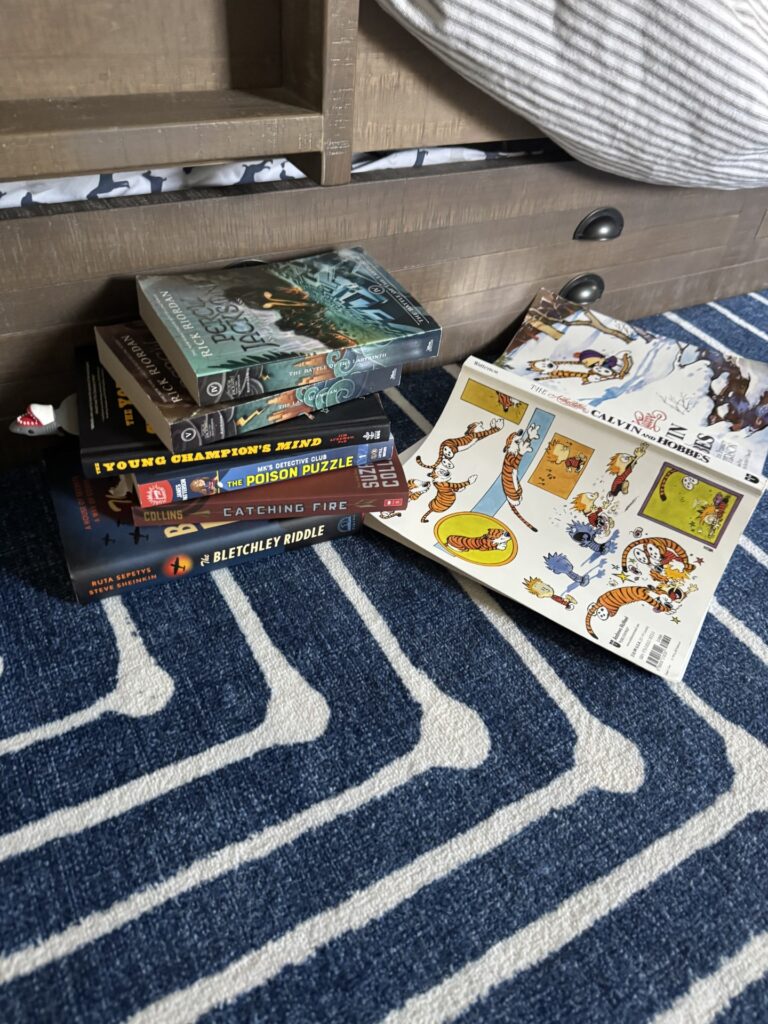
In our house, there’s one rule the kids know by heart: you can always ask for a book. If there’s something they want to learn about…space, animals, history, sports…it’s open season. Books, experiences, conversations…it’s all fair game. Because at the core of it, what I really want to teach them is simple: curiosity matters.
Not just for school. Not just for hobbies. But for life.
I want them to understand that the world is so much bigger than us. That purpose isn’t something we wait around for. It’s something we explore and uncover, through trying new things, asking questions, and stepping outside of what’s comfortable.
Whether it’s traveling together, picking up new interests, or just leaving the door open for any random question at the dinner table, my hope is to plant seeds. Seeds of curiosity. Seeds of openness. Seeds that remind them to keep looking both outward and inward. Hopefully, to create wonder about the world and about themselves.
Do they fully get it yet at 10 and 7 years old? Probably not. But that doesn’t mean we stop trying. It’s in those little moments, books, questions, adventures, where lifelong purpose starts to take root.
Curiosity might just be the quiet superpower that keeps us all connected to something bigger.
“I have no special talents. I am only passionately curious.”— Albert Einstein

Direct Indexing Overview
“Direct indexing offers investors a more customizable and tax-aware way to gain broad market exposure. By owning individual securities rather than a single fund, investors may create more opportunities for tax-loss harvesting, reduce concentrated positions over time, and tailor portfolios to their specific circumstances.

Quarterly Market Commentary
Equity markets in 2026 resemble a revolving door, with leadership regimes swinging wildly from small caps to value and then to growth equities. The rapid rotations we’ve witnessed over the past six months demonstrate the futility of attempting to time equity markets.

Four Pillar Friday
Stories, research, and reflections on how we spend our most important currency: TIME