


Insights Blog
Hanging with 20,000 of my Closest Friends
Jun 19, 2023 // Adam Bruderly
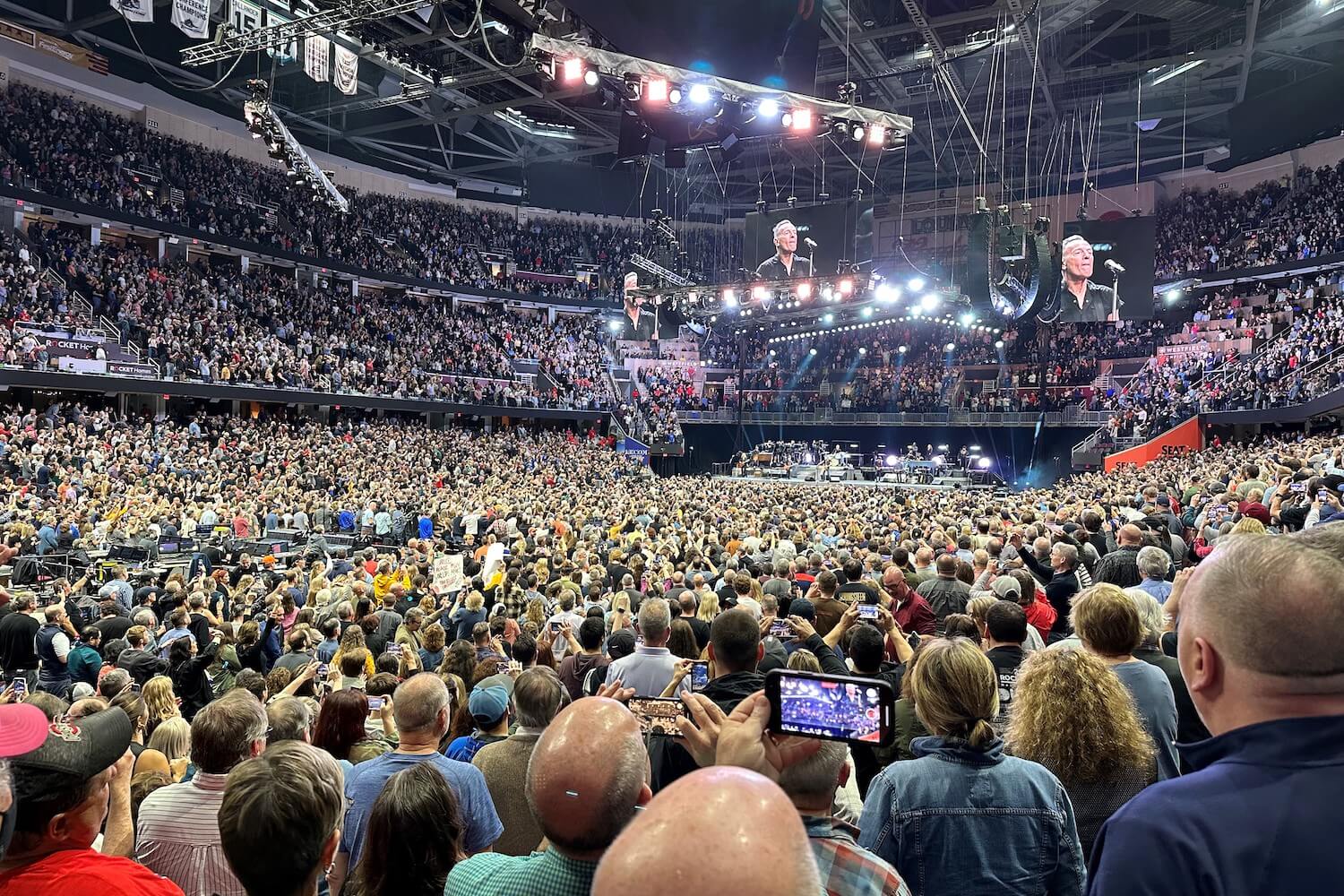
We recently attended our fourth Bruce Springsteen & The E Street Band concert, each of which has been an unforgettable experience. Every time I leave the venue, I find myself questioning how he consistently delivers such powerful performances. His illustrious career, which commenced with his first concert in 1972 at the tender age of 23 and has spanned five decades, has blessed us with generation-defining music that has become the soundtrack of our lives.
I not only wonder about his methods but also his motives. And for the first time, as the lights brightened at the end of the show, I think I grasped why he continues to create and perform. As much as we, the audience, gain from his music and the communal experience of sharing it with an arena full of Springsteen fans, I believe he and the E Street Band receive an equal, if not greater, emotional return. He can sense the bonds his music has fostered, the memorable moments underscored by his songs, and the tough times his music has helped people endure. I vividly recall the emotions I felt when I first listened to ‘The Rising’ in 2002 about a year after 9/11. I comprehend the unity of 20,000 voices harmonizing to ‘Born to Run,’ but I imagine the experience of standing onstage, hearing the lyrics you penned being sung back to you, is on an entirely different level. As much as we say thanks Bruce, he is saying that right back to us.
“Tramps like us, baby, we were born to run.”

Alternative Investments Overview
Alternative investments can play a valuable role in a portfolio—but only when used with a clear purpose. This overview explores how alternatives may enhance returns, improve diversification, and support tax efficiency, while highlighting the risks, structures, and planning considerations investors should understand.

Direct Indexing Overview
“Direct indexing offers investors a more customizable and tax-aware way to gain broad market exposure. By owning individual securities rather than a single fund, investors may create more opportunities for tax-loss harvesting, reduce concentrated positions over time, and tailor portfolios to their specific circumstances.

Quarterly Market Commentary
Equity markets in 2026 resemble a revolving door, with leadership regimes swinging wildly from small caps to value and then to growth equities. The rapid rotations we’ve witnessed over the past six months demonstrate the futility of attempting to time equity markets.