



Insights Blog
Alternative Investments Overview
September 30th, 2026 // Jack LaLiberte
What are Alternative Investments?
The definition of an alternative investment varies depending on who you ask. However, the generally accepted catch-all is that alternative investments include financial assets outside of the traditional equity, bond and cash categories. This includes private equity and real estate, as well as more esoteric assets like cryptocurrencies and art. We’ve seen these alternative asset classes garner more interest in recent years. In fact, it’s difficult to listen to or read the financial press without touching on the democratization of alts and the near-daily headlines surrounding private credit. Broadly speaking, there are two categories of alternative investments:
- Diversifiers: These assets are appealing due to their perceived low level of correlation to public markets and the potential for reduced volatility. Some examples include commodities, real estate and private lending. Some asset classes within this category include yield or inflation-hedging characteristics.
- Return Enhancers: Private equity and venture capital investments are intended to increase portfolio returns due to the presence of an illiquidity premium and a greater dispersion in manager skill relative to public equity securities. Typically, the objective of investors in these asset classes is to earn returns above what is on offer in public equity markets.
Putting Alts In Context: An Objectives-Based Framework
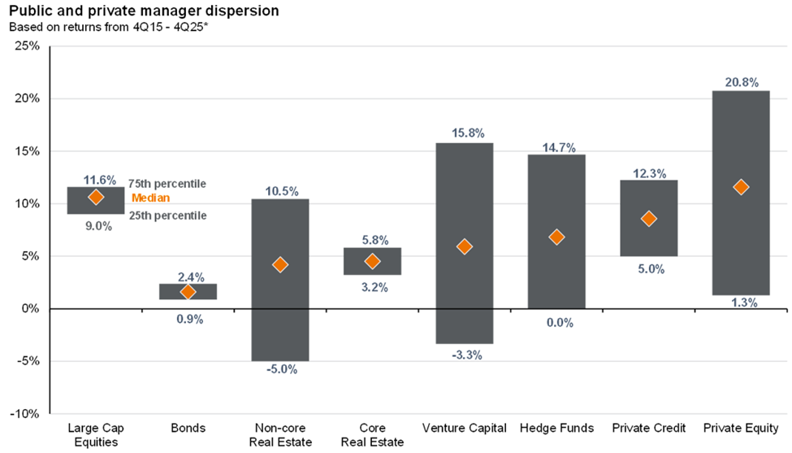
While alternative investments are often painted as a panacea for all the perceived drawbacks of public markets, that’s generally not universally true. Allocating to alternative investments within client portfolios without first gaining an understanding of their objectives and constraints is akin to drafting a team without knowing what sport you’re going to play. You may select individuals with different characteristics for a soccer team than for a wrestling match. Although public markets have been tremendous engines of wealth generation over the past century, periods of volatility can leave investors feeling exposed. The optimal use of alternative investments involves matching asset classes with the role that they are intended to play, along with an emphasis on manager selection. In public markets, whether equities or fixed income, manager dispersion between the best and worst managers is relatively narrow. However, in alternative asset classes, manager selection can often outweigh the performance of the asset class itself. While manager selection is as much an art as a science, context is critical. It’s difficult to determine if a manager or deal is attractive in a vacuum. However, upon reviewing a broad array of managers and investment vehicles, differentiation becomes more apparent.
What Roles Do Alts Play In Your Portfolio?
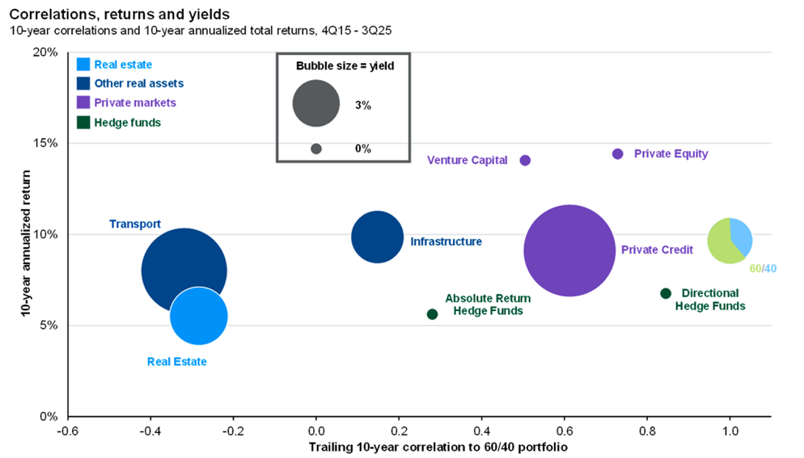
The two primary roles of alternative investments are to mute volatility by lowering correlation with public markets or to produce outsized returns. Some alternative investments are marketed as a solution for all investment-related concerns. However, they tend to fit one or two roles well and should be framed and utilized accordingly.
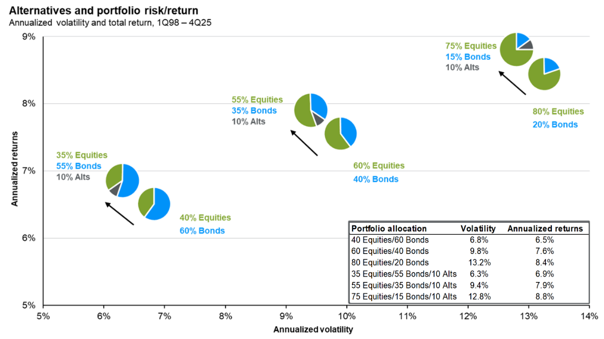
One of the broad categories of alternative investments is diversifiers. A sub-category is investments that are purely designed with muted volatility in mind, like hedge funds and some derivative strategies. A lack of correlation in and of itself is not necessarily a good thing. The S&P 500, for example, has delivered an average return of around 14% over the past decade. The volatility of large-cap US equities has been fairly muted over that time-frame, even when you factor in the shocks around COVID in 2020 and tariffs in 2025. The desire for volatility reduction is often misguided when evaluating alternative asset classes. Certain segments, like hedge funds, often charge hefty fees to deliver muted performance. A reduction in volatility can often be achieved more efficiently by managing asset allocation; the proportion of equities, fixed income and cash that make up the portfolio.
Diversifiers and Return Enhancers
Diversifiers: Real Estate: Rather than simply reducing correlation with equity markets, real estate also provides tangible benefits for investors seeking tax-efficient sources of income. Real estate investing encompasses a wide range of property types and risk levels. While these investments can be uncorrelated with public equities at times, that’s not their primary purpose within a portfolio. Many real estate investments produce tax-efficient income. This is due to the advantageous depreciation rules that real estate investors may take advantage of. However, there are a few items prospective investors should consider. First, if you are a passive real estate investor and are not actively involved in managing the property, you limit your capacity to utilize the losses generated. You may only use them to offset passive taxable income, not ordinary income. If not used, these losses can be carried forward indefinitely. Additionally, when real estate investments are sold, that depreciation is likely to be recaptured, increasing the tax liability at the time of sale. This isn’t necessarily a negative. After all, a dollar of tax savings today is more valuable than a dollar of tax liability in the future. Where clients may run into trouble is when they fail to plan appropriately for a tax liability given an incomplete understanding of their basis. Return Enhancers: PE & Venture: The other function of alternative investments is to generate returns above and beyond the market risk premium on offer in public securities. The segment that best suits this purpose is private equity. Core private equity sponsors tend to focus on purchasing controlling interests in more mature businesses. Venture capital, a subset of the private equity universe, specializes in purchasing minority stakes in early-stage growth companies. Typically, investors will make a capital commitment to a private equity or venture capital fund and that capital will be called down by the sponsor over a handful of years. This investment is often locked up for an extended period (generally 5-10 years) before investors begin to see capital returned. In the interim, managers seek to improve their portfolio companies by optimizing their capital stack, institutionalizing processes and increasing revenue, amongst other pursuits, in an effort to increase their value. Although private equity returns are highly correlated with public equities, there can be an opportunity to earn outsized returns. However, these returns are highly dependent on manager selection, as manager dispersion is considerably wider in private equity than for public equity managers.
Alternative Investment Risks
Although alternative investments can provide certain tax and return benefits when used appropriately, they carry substantial risks in addition to those assumed by investors in public securities. Some of these risks include the following:
- General Economic Risk (Systematic Risk): Risk is ubiquitous across public and private markets. Private investments are impacted by many of the same macroeconomic factors that buffet the S&P 500 on a daily basis. However, the impact on private companies can be more difficult to determine and, in many cases, more severe.
- Liquidity: Nearly all alternative investments involve some element of illiquidity. Some offer periodic (i.e. quarterly) redemption windows, while most offer none at all. As such, additional consideration is required around cash flow planning for investors utilizing these vehicles. While traditional financial theory indicates that there should be an additional return premium to compensate investors for this lack of liquidity, others have recently postulated that investors’ enchantment with smoothed returns may be so great that investors are willing to overpay for assets with perceived lower volatility, resulting in a negative liquidity premium.
- Leverage: Private investments tend to employ a greater amount of leverage than their public counterparts. Sometimes, the total leverage is difficult to determine, as a sponsor may utilize leverage at a portfolio level as well as within individual portfolio companies. While leverage can magnify returns for successful investments, it also adds a degree of risk, including an element of timing risk that was not otherwise present. For example, in 2020 and 2021, some real estate investors, to take advantage of low interest rates, employed short-term interest-only debt. When the debt came due a few years later, interest rates had risen dramatically and lenders were often unwilling to lend the same proportion of a property’s value. As such, many investors had to sell properties at distressed prices or raise additional equity, diluting existing investors, even if the fundamentals of the property (occupancy, cash flow, etc.) were sound. While this was a unique sequence of events, it demonstrates how the addition of leverage adds another dimension of risk beyond fundamentals. Furthermore, investors in private vehicles may not always be fully aware of the amount and nature of leverage that the manager is utilizing.
- Lack of Transparency: Many private investments are “blind pools” where investors commit capital without visibility into what the underlying holdings will be and without fixed timelines for capital deployment. This cash flow uncertainty can add additional risk from a planning perspective, as assets must be held off to the side to facilitate future capital calls. This cash drag can dilute returns, as the internal rate of return for the fund can vary dramatically from the rate of return realized by the investor.
- Vintage Risk: Private investment timing can outweigh manager skill at times. As such, it is prudent to engage in vintage stacking or a fund of funds approach. Investing too much capital in funds of a single vintage year can over-expose a portfolio to the economic dynamics of a specific period.
- Higher Fees: Private investments typically have substantially higher fees than their public counterparts. The classic private equity/hedge fund model is a 2% management fee as well as a 20% performance fee. Private investments also have additional administrative fees, which are not always readily disclosed.
Asset Location: Optimizing After-Tax Returns
Asset location is one of the simplest ways for advisors to add value. At its core, asset location involves shifting tax-inefficient assets into accounts that are tax-deferred or tax-free. For private investments, we encourage clients to hold tax efficient assets, particularly real estate, in taxable accounts. Given the ability of real estate investments to pass through depreciation to limited partners, the distributions from these investments are typically tax advantaged. For growth assets, the ideal location depends on the client’s timeline and objectives. These investments are usually tax-efficient, as private equity and venture funds generally produce long-term capital gains. However, careful planning is critical, as the cash flow received from these investments may not align with the tax consequences they create. 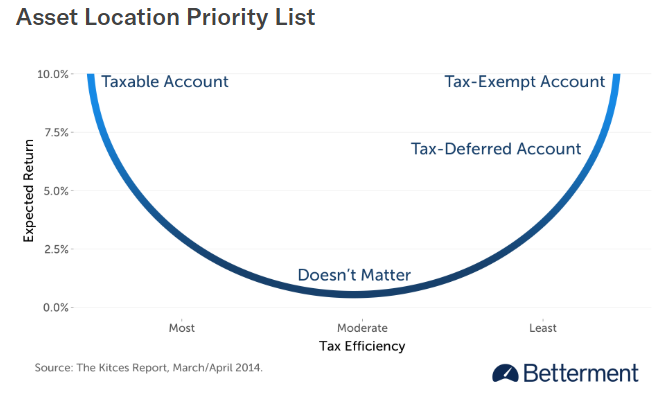
Structure Matters: Evergreen vs. Drawdown
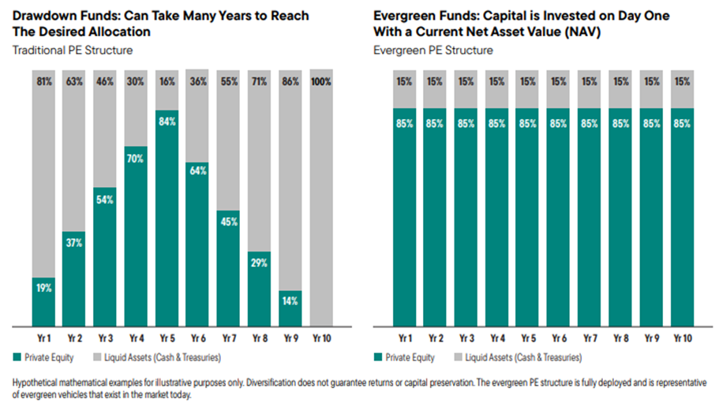
Evergreen funds represent a newer structure in the private investment space which seeks to alleviate some of the drawbacks of the traditional drawdown structure. Rather than calling down capital over several years, evergreen funds deploy investor capital at the time of investment. Additionally, these funds often allow investors to reinvest distributions and to make follow-on investments into the fund, providing additional flexibility to deploy based on the investor’s cash flow and desired allocation. Internal Rate of Return (“IRR”) is a popular but flawed metric utilized to measure returns for private investments. IRR assumes that interim cash flows can be reinvested at the IRR itself, which is often not the case for traditional drawdown funds. Additionally, IRR ignores scope. If a fund only calls a portion of your capital but achieves an impressive IRR, the metric ignores the cash drag due to the un-called portion, presenting a misleading picture of the overall economic experience for the investor. Evergreen funds allow investors to deploy cash up-front, permitting that capital to begin compounding more rapidly than in a drawdown fund. While the IRRs achieved by evergreen funds are often lower than their drawdown counterparts, they provide investors with better opportunities for compounding wealth, as there is a larger capital base deployed over a longer period. While both structures have their place, we often find that evergreen vehicles provide for a superior investor experience.
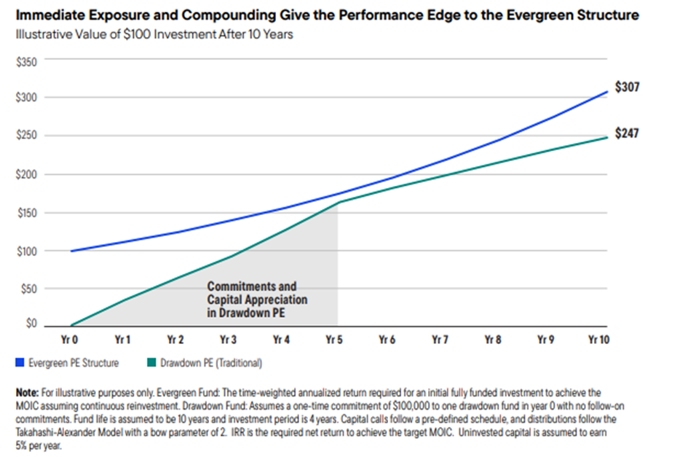
While important, investment structure is a secondary consideration. Manager dispersion in private investments is wide, making manager selection critical in the private investment universe. However, evergreen vehicles allow investors to fully deploy their capital and eliminate the need to track future capital commitments, often driving superior outcomes in a consistent, repeatable manner.
Conclusion: Putting It All Together
Alternative investments are a hot topic amongst investment advisors and clients. These assets fall broadly into two categories: diversifiers and return enhancers. Diversifiers, ideally, help to mitigate volatility, while return enhancers seek to produce performance results above and beyond that available in public equity securities. While some paint alternative investments as a solution for all the perceived drawbacks of investing in public securities, they can be unhelpful without proper context, education and planning. Alternative investments should be viewed as tools with a specific purpose rather than a solution for all public market concerns. Alternative investments come with additional risks, beyond those shouldered by investors in public, liquid securities. These include illiquidity, lack of transparency, and higher costs, amongst others. How alternatives are utilized and structured is also impactful. Investors should be aware of the entity’s structure and what that means for their personal cash flow planning. It’s easier than ever for investors to be distracted by shiny objects, including alternative investments with glossy brochures and carefully curated performance metrics. These often reference impressive IRR numbers and misleading volatility figures. While there are excellent managers doing incredible things in the alternative investments space, it’s important to maintain a healthy degree of skepticism. There are no silver bullets. However, when properly evaluated, located and sized, certain alternative asset classes can serve as useful tools for investors seeking to achieve specific goals. Disclosure: This information was prepared by FSM Wealth Advisors, LLC d/b/a Journey Wealth Management, LLC, a federally registered investment adviser under the Investment Advisers Act of 1940. Registration as an investment adviser does not imply a certain level of skill or training. Neither the information presented nor any opinion expressed herein should be construed as personalized investment, financial planning, tax, or legal advice. For advice specific to your situation, please consult an appropriately qualified professional adviser(s). Certain information herein may have been obtained from various third-party sources; Journey does not guarantee the accuracy or completeness of such information. Investing involves the risk of loss and investors should be prepared to bear potential losses. Past performance is not indicative of future results.
Alternative Investments Overview
Alternative investments can play a valuable role in a portfolio—but only when used with a clear purpose. This overview explores how alternatives may enhance returns, improve diversification, and support tax efficiency, while highlighting the risks, structures, and planning considerations investors should understand.

Direct Indexing Overview
“Direct indexing offers investors a more customizable and tax-aware way to gain broad market exposure. By owning individual securities rather than a single fund, investors may create more opportunities for tax-loss harvesting, reduce concentrated positions over time, and tailor portfolios to their specific circumstances.

Quarterly Market Commentary
Equity markets in 2026 resemble a revolving door, with leadership regimes swinging wildly from small caps to value and then to growth equities. The rapid rotations we’ve witnessed over the past six months demonstrate the futility of attempting to time equity markets.