


Insights Blog
Four Pillar Friday
May 22nd, 2026 // Adam Bruderly
Physical
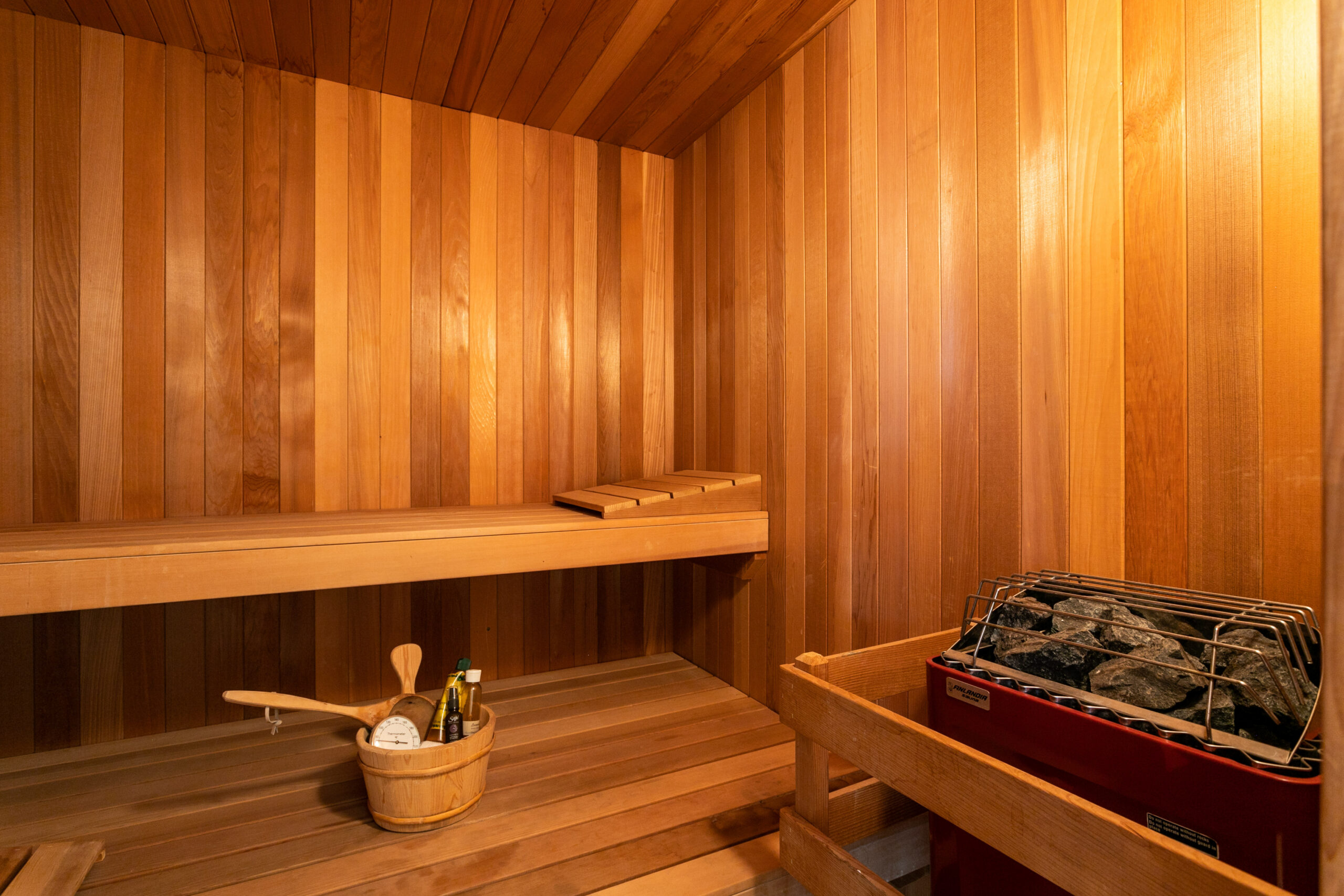
Saunas are having a moment. Cold plunges too. The wellness corner of the internet has decided this is the next thing, and the price of a backyard setup has tripled.
The research is genuinely interesting, but the temptation when something becomes a trend is to either dismiss it or oversell it. Neither is fair to the data.
A team at the University of Eastern Finland (the mecca of sauna) followed 2,315 Finnish men between 42 and 60 for an average of twenty years as part of the Kuopio Ischemic Heart Disease Study. Men who used a sauna two to three times a week had a 22% lower risk of dementia. Men who used one four to seven times a week had a 66% lower risk of dementia and a 65% lower risk of Alzheimer’s. A larger Finnish Institute for Health and Welfare study of nearly 14,000 men and women found the same pattern. The numbers held up after controlling for age, blood pressure, cholesterol, BMI, smoking, alcohol, and chronic illness.
These are observational studies. They tell us frequent sauna users had lower dementia rates. They do not tell us the sauna caused it specifically. The people who go nine times a month in Finland are also moving more, sleeping more, and living in a country with one sauna for every three people and 99% national usage. The sauna is not a supplement they bought. It is woven into a way of life.
And the Alzheimer’s Society states the best evidence for reducing dementia risk is still the simple things. Exercise, a reasonable diet, not smoking, managing your blood pressure… Sauna may help, but it is not a replacement for all the other things.
Along with the dementia numbers what I also love is what is underneath it. Sauna sessions raise your heart rate to the level of moderate exercise. They lower blood pressure. They reduce inflammation. They prime the body for better sleep. And in places that take them seriously, they are a form of connection and quiet. Fifteen minutes where you cannot be on your phone or multitask or optimize anything. You sit. You sweat. Perhaps, you chat.
The lesson from Finland might not be about heat at all. It is that a country built a long, slow routine around stillness, recovery, and community. Twenty years later, the data picked up on it.
Mental
A 2017 study out of Aalto University put 42 men into an fMRI machine, 21 entrepreneurs and 21 fathers. The fathers saw their own children alongside familiar kids who were not theirs. The entrepreneurs saw their own companies alongside other businesses they knew well.
The brains did the same thing.
I struggled to believe this was true when I read the paper. The idea that what a founder feels for their company is the same thing, in the same brain, as what I feel watching my sons. Loving your kid is not loving a P&L.
But across every measure including closeness, joy, pride, love it was behaviorally indistinguishable. Same reward circuits. Same threat sensitivity. And when the fathers looked at their own children, activity decreased in the brain regions tied to objective reasoning. The parts of your brain that see clearly go offline when you are looking at your own kid. Neuroscientists call it blind love.
The founders showed the same suppression. Same regions. Same offline.
The Aalto team concluded that both forms of love rely on the same neural architecture for reward, emotional processing, and social understanding.
It explains why founders endure what they endure. You do not push through years of rejection because the math works. You push through because the thing you built is something you love. Not as a metaphor. The scan says it is the same love.
It is also a warning, and it applies to many of us. The network that lets you defend what you built is the same one that keeps you from seeing it.
There is a good chance I tell you with confidence my boys are funny, brilliant, handsome, and more interesting than most. The fMRI says I am the last person you should ask. The founder three doors down feels exactly that way about her company. I cannot find the place where the finding is wrong.
The question is not whether to love what you have built. The question is who and what you have built in around you. The voices that can still see what you no longer can.
Your brain has been wired to miss it. Theirs has not.
Financial
There is a strange thing that happens as you get older. Time does not just move faster. Life does.
I have felt it more the last few years, and especially as I come up on 47 this August. Summers used to feel endless. Any one of them could hold an entire world inside it. Now I blink and school is starting again.
Researchers used to think this was about memory density or that older brains store fewer distinct moments and so the years compress in hindsight. The newest research complicates that. The mechanism is not the count of memories. It is the aging brain’s capacity to take new information in. Encoding, not storage.
The distinction matters. Memory density would say the answer is more — more novelty, more experiences, more first times. The newer finding says something quieter. Time does not speed up because you stopped doing things. It speeds up because you stopped taking them in.
Life speeds up when life starts to look the same. Not because the days are similar in content. Because the brain stopped registering the differences.
That changes what I am trying to do this summer. The honest fix is not adding to the calendar. It is being present for what is already on it. The lacrosse tournament we attend where I watch the games but thing about the 6 hour drive home is my brain barely encoded. The summer that flies by is not the one with too few events. It is the one we doing experience during the moment.
The whole point of building a life with margin, be it financial, professional, geographic is to buy back the capacity to be present. To not be half-thinking about the next thing while your son finishes his at-bat. The plan is supposed to buy you years. The only ones that count are the ones you actually register.
Maybe that is what wisdom is. Understanding that real wealth is not measured in years, but in moments you were present in. Not present for. Present in.
So this summer you may not have to do “more.” But just notice more. Not because time is running out. Because the years you do not notice are the ones you lose.
Spiritual
A few months ago I wrote about Arlo joining the family. About how a puppy I did not get for health reasons turned out to be a part of that. Movement. Routine. Time outside. The forced act of being present with something other than a screen.
I undersold it.
The American Enterprise Institute released its 2025 American Neighbor Survey this fall. The headline is grim and not surprising. In just over a decade, the share of young adults who talk to their neighbors regularly fell from 51% to 25%. Across the whole population, the drop went from nearly 6 in 10 to just 4 in 10. Two-thirds of Americans now believe being a good neighbor means keeping your distance. Among young adults, 7 in 10
That is a quiet collapse. And it has been happening while we have been talking about loneliness as if it were a crisis we needed an app to fix.
The survey looked at what actually predicts whether someone knows the people around them. Not income. Not housing type. Not whether you rent or own. The single strongest predictor was the most boring thing on the list.
Walking.
55% of Americans who walk their neighborhood at least once a week talk to their neighbors a few times a week. Among those who walk only a few times a year, it drops to 29%. Among those who do not walk at all, 19%.
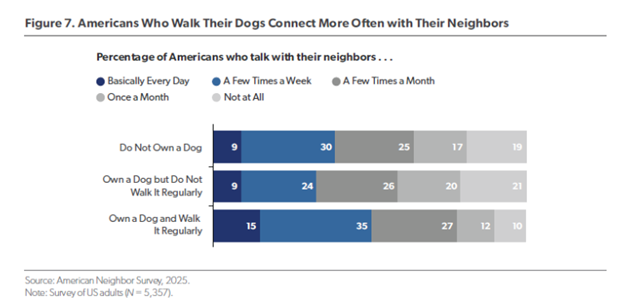
And then this. Of people who own a dog and walk it regularly, 50% talk with their neighbors weekly. Of people who own a dog but do not walk it, only 33% do. Same dog. Same neighborhood. Different routine. Different life.
We keep outsourcing community to memberships, retreats, curated online groups. Things we pay for and schedule. The data is telling us something harder to monetize. The shortest path to knowing your neighbors, or a good conversation, is going outside on foot, often enough that they start to recognize you.
Arlo gets me out the door. He talks to every dog he can find. And while he does, I am standing on a sidewalk having a conversation with someone I would have otherwise never met.
The spiritual pillar is absolutely about meaning and connection. And the research keeps pointing to the same plain doorway. A sidewalk and a pair of shoes.
And In The End
From all of us at The 9:03 Collective: thanks for reading. Keep showing up. Stay curious. And never forget that the clock is running, so make it count.
If you’ve been enjoying Four Pillar Friday, the best way to support is simple: share it with a friend, forward it to someone who might need it, or subscribe if you haven’t already. The more people we reach, the more conversations we can spark about living with intention.
Until next week—keep building your moments.
The Journey Team & The 9:03

Direct Indexing Overview
“Direct indexing offers investors a more customizable and tax-aware way to gain broad market exposure. By owning individual securities rather than a single fund, investors may create more opportunities for tax-loss harvesting, reduce concentrated positions over time, and tailor portfolios to their specific circumstances.

Quarterly Market Commentary
Equity markets in 2026 resemble a revolving door, with leadership regimes swinging wildly from small caps to value and then to growth equities. The rapid rotations we’ve witnessed over the past six months demonstrate the futility of attempting to time equity markets.

Four Pillar Friday
Stories, research, and reflections on how we spend our most important currency: TIME